

Porsche Panamera service in Dallas depends on model generation and powertrain complexity
Porsche Panamera service is fundamentally dependent on generation, engine configuration, and hybrid integration level. The Panamera platform has evolved from relatively straightforward V6 and V8 configurations into high-output twin-turbo systems and advanced plug-in hybrid architectures with integrated electric motors and battery systems. Each configuration introduces different maintenance priorities, failure risks, and diagnostic requirements.
A Dallas-based Porsche service approach must account for climate stress, stop-and-go driving, and high-speed highway use. Heat exposure accelerates fluid degradation, stresses cooling systems, and impacts battery performance in hybrid models. These environmental factors compound the mechanical complexity already present in the Panamera platform.
The core Panamera maintenance schedule is structured but not sufficient on its own
Porsche defines a baseline service schedule built around 10,000-mile or annual intervals. This includes engine oil service, inspection routines, and system checks designed to maintain performance and reliability.
However, adherence to the baseline schedule alone is not sufficient for long-term ownership. The Panamera requires layered maintenance that accounts for:
- Brake fluid replacement on a fixed time interval
- Transmission service based on usage intensity
- Cooling system inspections beyond standard intervals
- Suspension component wear due to vehicle weight
- Battery system health monitoring in hybrid variants
- Tire and alignment checks driven by performance geometry
These additional requirements are not optional in practice. They represent the difference between stable long-term ownership and accelerated component failure.
First-generation Panamera models prioritize age-related mechanical reliability
First-generation Panamera models (2010–2016) require service strategies centered around age and wear rather than purely mileage. These vehicles introduced the Panamera platform with naturally aspirated and turbocharged engines, along with early hybrid integration.
Key specifications across early models
| Model Example | Engine Type | Horsepower Range | Transmission | Notable Characteristics |
| Panamera / S | V6 / V8 NA | ~300–400 hp | 7-speed PDK / auto | Simpler drivetrain, heavier chassis |
| Panamera Turbo | Twin-turbo V8 | ~500 hp | AWD PDK | High thermal load, complex cooling |
| Panamera Hybrid | V6 + electric | ~380 hp combined | Hybrid system | Early battery architecture |
Primary service concerns
Age is the dominant factor in this generation. Key failure points include:
- Cooling system degradation, including water pumps and radiators
- Oil leaks from aging seals and gaskets
- Air suspension wear or compressor failure
- Carbon buildup in direct-injection engines
- Electrical system inconsistencies from aging modules
These vehicles demand proactive inspection rather than reactive repair. Deferred maintenance compounds rapidly due to the interconnected nature of engine and chassis systems.
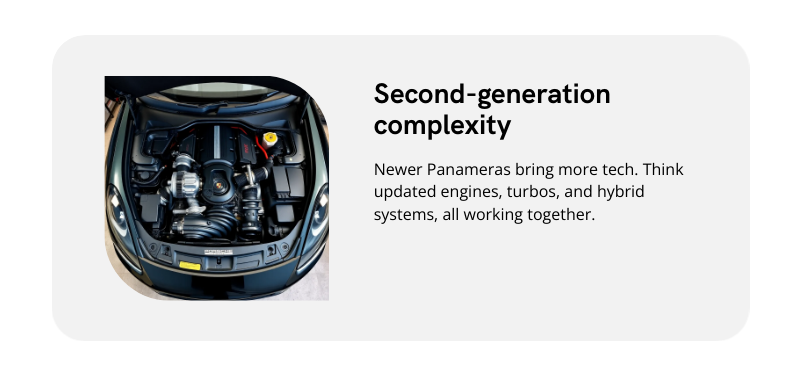
Second-generation Panamera models introduce system complexity and performance scaling
Second-generation Panamera models (2017–2023) represent a structural and technological shift. The platform was redesigned with a new chassis, updated drivetrains, and expanded use of turbocharged engines and hybrid systems.
Key specifications across mid-generation models
| Model Example | Engine Type | Horsepower Range | Drivetrain | Notable Characteristics |
| Panamera 4 / 4S | Twin-turbo V6 | ~330–440 hp | AWD | Balanced performance and efficiency |
| Panamera GTS | Twin-turbo V8 | ~450–480 hp | AWD | Performance-tuned suspension |
| Panamera Turbo / Turbo S | Twin-turbo V8 | ~550–620 hp | AWD | High-performance braking and cooling |
| 4 E-Hybrid | V6 + electric | ~450 hp | AWD | Integrated hybrid drivetrain |
| Turbo S E-Hybrid | V8 + electric | ~680 hp | AWD | Maximum output, high system load |
Primary service considerations
System integration becomes the defining challenge in this generation. Maintenance must account for:
- Advanced cooling systems supporting turbocharged engines
- PDK transmission calibration and fluid condition
- Brake system wear due to vehicle weight and performance output
- Air suspension complexity, including multi-chamber systems
- Hybrid battery thermal management and charging systems
Failures are rarely isolated. A cooling issue can affect turbo performance, hybrid efficiency, and transmission behavior simultaneously.
Third-generation Panamera models demand hybrid system expertise and software-aware diagnostics
Third-generation Panamera models (2024–present) significantly increase reliance on hybrid technology and software integration. High-output hybrid systems now define the upper range of the lineup.
Key specifications across current models
| Model Example | Engine Type | Horsepower | Battery Integration | Notable Characteristics |
| Base Panamera | Twin-turbo V6 | ~350 hp | None | Entry-level performance |
| Panamera 4 E-Hybrid | V6 + electric | ~460 hp | Plug-in hybrid | Efficiency-performance balance |
| Panamera Turbo E-Hybrid | V8 + electric | ~670 hp | Plug-in hybrid | High-output hybrid system |
| Turbo S E-Hybrid | V8 + electric | ~770 hp | Advanced hybrid | Peak performance and complexity |
Primary service implications
Hybrid dominance introduces new maintenance variables:
- High-voltage battery health and degradation tracking
- Charging system diagnostics and hardware reliability
- Regenerative braking integration with conventional systems
- Software updates impacting drivability and efficiency
- Cooling systems managing both combustion and electric components
These vehicles require service environments equipped for high-voltage systems and manufacturer-level diagnostic tools.
Engine configuration directly influences service cost and frequency
Engine architecture is one of the most reliable predictors of maintenance intensity. The Panamera lineup includes V6, V8, and hybrid-assisted configurations, each with distinct service demands.
Comparative service impact by engine type
| Engine Type | Service Complexity | Maintenance Cost Profile | Key Risk Areas |
| Naturally Aspirated V6/V8 | Moderate | Lower relative cost | Aging components |
| Twin-Turbo V6 | High | Moderate to high | Turbo heat stress |
| Twin-Turbo V8 | Very high | High | Cooling and oil management |
| Hybrid (V6/V8 + electric) | Maximum | Highest | Battery and integration systems |
Hybrid systems add an additional layer rather than replacing traditional maintenance. Internal combustion components still require full service attention.
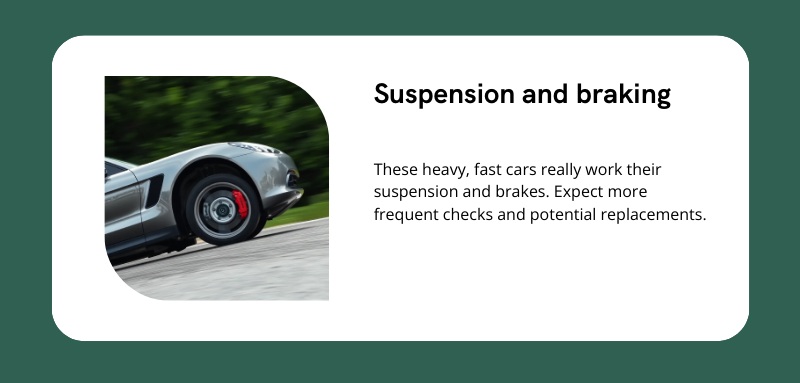
Suspension and braking systems are critical service drivers in all Panamera models
The Panamera’s weight and performance profile place exceptional stress on suspension and braking systems. These components often require more frequent attention than owners expect.
Common suspension service points
- Air suspension struts and compressors
- Control arms and bushings
- Adaptive damping system calibration
- Alignment sensitivity due to performance geometry
Brake system considerations
- Accelerated pad and rotor wear due to vehicle mass
- High-performance braking systems requiring specialized components
- Integration with regenerative braking in hybrid models
Neglect in these systems directly impacts safety, ride quality, and long-term component wear.
Transmission performance depends heavily on maintenance consistency
The Porsche dual-clutch transmission (PDK) is a defining feature of the Panamera driving experience. Its performance and longevity depend on fluid condition and calibration.
Transmission service is often underestimated. Key requirements include:
- Scheduled fluid replacement
- Software calibration updates
- Monitoring for shift irregularities
- Addressing early signs of hesitation or harsh engagement
Failure to maintain the transmission can lead to cascading drivetrain issues.
Cooling systems are the most overlooked high-risk area in Panamera service
Cooling system integrity is critical across all Panamera models. The combination of turbocharging, hybrid integration, and high performance creates significant thermal demand.
Cooling system risk factors
- Multiple radiators and heat exchangers
- Electric and mechanical cooling components
- Thermal management for hybrid batteries
- Sensitivity to coolant quality and flow restrictions
Cooling failures often precede major engine or hybrid system damage.
Dallas driving conditions increase stress on Panamera systems
Dallas conditions introduce specific operational stress that affects service intervals and component wear.
Environmental impact factors
- High ambient temperatures stressing cooling systems
- Urban traffic increasing brake and transmission load
- Highway speeds elevating engine and turbo stress
- Seasonal fluctuations affecting tire and battery performance
These factors justify more frequent inspection cycles compared to moderate climates.
Selecting a qualified Porsche service provider determines long-term reliability
Panamera service quality depends on technical capability, not just general automotive experience. The vehicle’s complexity requires specialized knowledge and tools.
Essential service provider criteria
- Experience with Porsche-specific systems
- Access to manufacturer-level diagnostics
- Capability to service hybrid systems safely
- Understanding of performance-oriented suspension and braking systems
- Ability to identify issues before failure occurs
Improper service introduces risks that often exceed the cost of correct maintenance.
Common misconceptions about Panamera service lead to preventable failures
Several assumptions about Panamera ownership lead to avoidable issues.
- Low mileage reduces maintenance needs — incorrect due to time-based degradation
- Hybrid models require less service — incorrect due to added system complexity
- Luxury vehicles are more durable — incorrect when maintenance is deferred
- Warning lights appear before serious issues — incorrect in many cases
Accurate understanding of these realities prevents long-term mechanical and financial consequences.
Practical service strategy for long-term Panamera ownership
Effective Panamera ownership requires a structured approach rather than reactive maintenance.
Recommended approach
- Follow baseline service intervals without delay
- Add proactive inspections for cooling, suspension, and braking systems
- Monitor hybrid systems continuously in applicable models
- Address minor issues immediately to prevent escalation
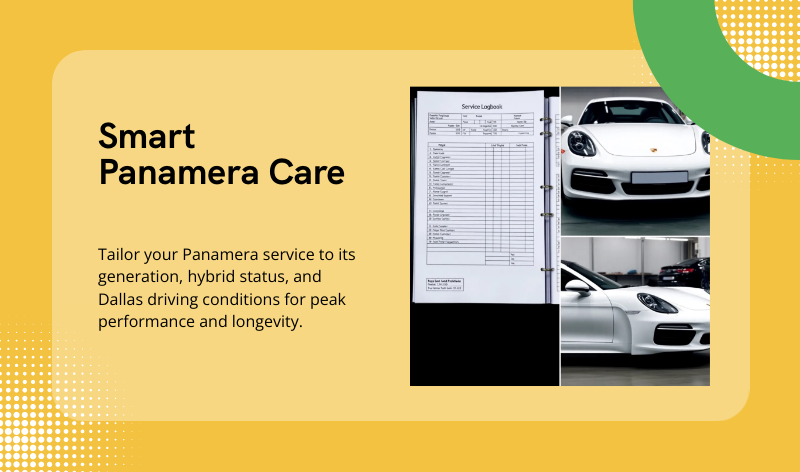
- Maintain detailed service records for continuity
This approach stabilizes ownership costs and preserves vehicle performance.
FAQ: Porsche Panamera Service
How often should a Porsche Panamera be serviced?
A Porsche Panamera should receive service every 10,000 miles or once per year, with additional maintenance based on age, usage, and model type.
Are Panamera hybrid models more expensive to maintain?
Panamera hybrid models typically have higher maintenance costs due to battery systems, charging components, and integrated drivetrains.
What is the most common issue in older Panamera models?
Older Panamera models most commonly experience cooling system issues, oil leaks, and suspension wear due to age.
Do Panamera Turbo models require more maintenance?
Turbocharged models require more intensive maintenance due to higher thermal load and performance demands.
Is the PDK transmission reliable?
The PDK transmission is reliable when properly maintained, but neglecting fluid service can lead to performance issues.
How long do Panamera brakes last?
Brake lifespan varies significantly based on driving style, but performance driving and vehicle weight typically shorten service intervals.
Can any mechanic service a Panamera?
Not all mechanics are equipped to service a Panamera due to its complexity, especially in hybrid models.