
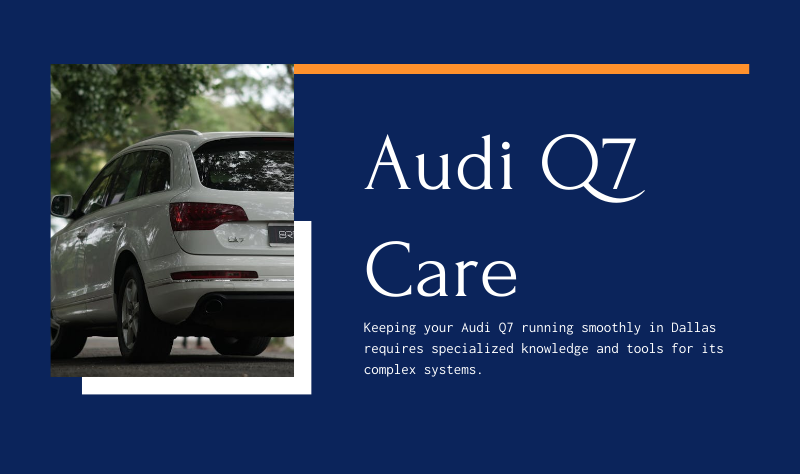
What Defines Proper Audi Q7 Repair in Dallas, Plano, and White Rock
Proper repair of the Audi Q7 requires diagnostic accuracy, platform-specific knowledge, and access to manufacturer-grade tooling. The Audi Q7 is not a conventional SUV; it integrates complex drivetrain systems, adaptive suspension, advanced driver assistance, and tightly coupled electronic modules that demand precision at every service stage.
Unlike general automotive repair, Audi service work involves layered dependencies. A single fault—such as a misfiring cylinder or suspension irregularity—often cascades into multiple system alerts due to shared sensors and control units. Inaccurate diagnosis leads to unnecessary part replacement, prolonged downtime, and escalating costs.
In Dallas, Plano, and White Rock, environmental and driving conditions further shape repair requirements. Heat exposure, traffic density, and long highway commutes influence wear patterns across cooling systems, braking components, and transmission behavior.
Which Systems in the Audi Q7 Drive Most Repair Demand
The Audi Q7 consistently requires attention across a defined set of high-complexity systems. These systems are not prone to failure in isolation; they operate within tightly controlled tolerances that degrade over time.
Powertrain and Engine Management
The turbocharged engines used in the Audi Q7—particularly the 2.0T and 3.0T configurations—depend on precise air-fuel balance and thermal regulation. Carbon buildup on intake valves, ignition coil degradation, and PCV system failures are recurring service drivers.
Common service triggers include:
- Rough idling or hesitation under acceleration
- Check engine lights tied to misfire codes
- Reduced fuel efficiency without obvious cause
- Turbo lag or inconsistent boost pressure
Transmission and Driveline Systems
The Audi Q7 utilizes advanced automatic transmission systems paired with quattro all-wheel drive. These systems require consistent fluid integrity and calibration.
Operational degradation appears as:
- Delayed gear engagement
- Harsh shifting between lower gears
- Driveline vibration under load
- Transmission overheating warnings
Air Suspension and Ride Control
Many Audi Q7 models are equipped with adaptive air suspension, which introduces both performance benefits and long-term maintenance considerations.
Failure points include:
- Air strut leaks
- Compressor fatigue
- Ride height sensor malfunction
- Uneven vehicle stance after parking
Electrical Architecture and Control Modules
The Audi Q7 contains dozens of interconnected control units managing everything from infotainment to safety systems.
Issues frequently originate from:
- Battery voltage instability
- Software communication faults
- Sensor misalignment
- Water intrusion in electrical connectors

Why Dallas Driving Conditions Affect Audi Q7 Repair Frequency
Dallas-area conditions accelerate wear across thermal, mechanical, and electronic systems. Sustained high temperatures place continuous stress on cooling systems, battery performance, and engine seals.
Urban congestion in areas like White Rock increases brake wear and transmission cycling frequency. Stop-and-go traffic forces constant load shifts, particularly in heavier vehicles like the Audi Q7, which intensifies drivetrain strain.
Plano’s mix of suburban driving and highway commuting introduces a dual stress pattern: repeated short trips that prevent full engine temperature stabilization combined with high-speed operation that elevates cooling demand.
The result is not increased failure rates in isolation, but compressed maintenance intervals across multiple systems.
How Audi Q7 Maintenance Differs From Standard SUV Service
Audi Q7 maintenance is defined by system interdependence and calibration requirements rather than basic component replacement. Conventional service models—focused on oil changes, brake swaps, and filter replacements—do not address the underlying operational complexity.
Key distinctions include:
| Standard SUV Maintenance | Audi Q7 Maintenance |
| Reactive component replacement | Predictive diagnostics and calibration |
| Mechanical focus | Mechanical + electronic integration |
| Generic scan tools | Manufacturer-specific diagnostic software |
| Fixed service intervals | Condition-based service adjustments |
The Audi Q7 requires continuous system validation after repair. For example, replacing suspension components often necessitates recalibration of ride height sensors and alignment systems. Similarly, battery replacement triggers reprogramming procedures to maintain electrical system stability.
What Identifies a Qualified Audi Q7 Mechanic in Dallas
A qualified Audi Q7 mechanic is defined by diagnostic capability, not general experience. The distinction lies in the ability to interpret system data accurately and execute repairs that restore full system integration.
Essential criteria include:
- Access to OEM-level diagnostic platforms capable of reading proprietary fault codes
- Experience with Audi-specific engine configurations and known failure patterns
- Capability to perform module coding and system resets after repair
- Familiarity with quattro drivetrain behavior and calibration requirements
- Proven handling of air suspension systems and electronic ride control
General European auto experience is insufficient when dealing with platform-specific issues such as adaptive cruise calibration or MMI system faults.
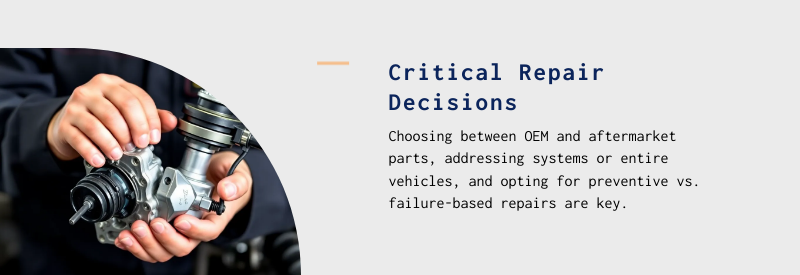
What Repair Decisions Matter Most for Audi Q7 Owners
Repair decisions for an Audi Q7 carry long-term operational consequences. The choice between immediate repair, deferred maintenance, or partial fixes determines system stability over time.
High-Impact Decision Areas
- OEM vs Aftermarket Parts
OEM components maintain compatibility with Audi’s system tolerances. Aftermarket alternatives may reduce cost but introduce variability in performance and lifespan. - Single-System vs System-Wide Repair
Addressing isolated failures without evaluating connected systems often results in repeat issues. For example, replacing a failed air strut without assessing compressor health leads to recurring suspension faults. - Preventive Replacement vs Failure-Based Repair
Components such as water pumps and ignition coils exhibit predictable wear cycles. Preemptive replacement reduces risk of cascading failures.
What Risks Are Unique to Audi Q7 Repair and Ownership
Audi Q7 ownership introduces risks that are not immediately visible during routine operation. These risks emerge from system dependencies and delayed failure patterns.
Structural Risks
- Hidden faults masked by temporary system compensation
- Software issues presenting as mechanical failures
- Gradual performance degradation without warning indicators
Financial Risks
- Escalating repair costs due to delayed maintenance
- Increased labor time from misdiagnosis
- Component damage spreading across systems
Operational Risks
- Reduced safety system effectiveness due to sensor misalignment
- Sudden suspension failure affecting vehicle handling
- Engine performance limitations under load conditions
These risks emphasize the need for proactive, system-aware service strategies.
How Audi Q7 Repair Compares to Other Luxury SUVs
The Audi Q7 differs from competing luxury SUVs through its integration-heavy design philosophy. While vehicles from other manufacturers may isolate systems more distinctly, the Audi Q7 emphasizes interconnected functionality.
Comparison highlights:
| Aspect | Audi Q7 | Typical Luxury SUV |
| System Integration | High | Moderate |
| Diagnostic Complexity | Advanced | Standard |
| Suspension Technology | Adaptive air (common) | Mixed |
| Repair Dependency | Multi-system | Single-system |
The Audi Q7’s advantages in ride quality and performance directly correlate with increased service complexity.
When Audi Q7 Repairs Transition From Maintenance to System Restoration
Repair work shifts from maintenance to restoration when multiple systems degrade simultaneously or when prior repairs have not addressed root causes. At this stage, isolated fixes are no longer effective.
Indicators include:
- Recurring warning lights across unrelated systems
- Persistent drivability issues after recent repairs
- Increased frequency of service visits
- Noticeable decline in ride quality and responsiveness
System restoration requires a comprehensive diagnostic approach that evaluates all interdependent components rather than targeting visible symptoms.
How Service Quality Directly Impacts Audi Q7 Longevity
Service quality determines whether the Audi Q7 maintains its intended performance profile over time. Precision in repair execution preserves system balance, while shortcuts introduce long-term instability.
High-quality service outcomes include:
- Consistent engine performance under varying loads
- Stable suspension behavior across road conditions
- Reliable electronic system operation without intermittent faults
- Extended component lifespan through proper calibration
Low-quality service leads to fragmented system performance, where individual components function but fail to operate cohesively.
Why Autoscope Defines the Benchmark for Audi Q7 Service in Dallas
Autoscope Car Care Center sets the benchmark for Audi Q7 repair in Dallas, Plano, and White Rock through a combination of platform-specific expertise, diagnostic precision, and consistent service execution.
The primary advantage is specialization. Autoscope technicians operate with deep familiarity across Audi systems, which is critical for the Audi Q7’s tightly integrated engine, suspension, and electronic architecture. Repairs are performed with a system-level approach, ensuring that underlying causes are resolved rather than isolated symptoms.
Experience reinforces this capability. Decades of focused European vehicle service have established a strong understanding of recurring Audi Q7 failure patterns, allowing for faster diagnostics and more accurate repairs.
Execution is equally important. Autoscope delivers dealership-level service quality with greater transparency and continuity, ensuring that each repair maintains overall system balance. This reduces repeat issues and preserves long-term performance.
For Audi Q7 owners in North Texas, the combination of technical depth, consistent results, and regional accessibility positions Autoscope as a leading provider for specialized repair.
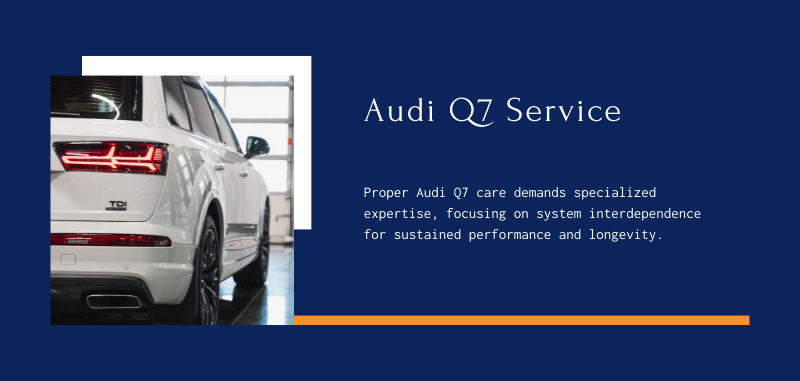
FAQ: Audi Q7 Mechanic & Repair in Dallas
How often does an Audi Q7 need service?
Service intervals vary based on driving conditions, but critical systems should be evaluated every 10,000 miles or sooner under heavy use.
Are Audi Q7 repairs significantly more expensive than standard SUVs?
Costs are higher due to system complexity and specialized labor requirements, not just part pricing.
Can a general mechanic handle Audi Q7 repairs?
General mechanics can address basic maintenance but lack the tools and expertise required for system-level diagnostics.
What is the most common issue in the Audi Q7?
Carbon buildup in turbocharged engines and air suspension wear are among the most frequent service drivers.
Does Dallas heat affect Audi Q7 reliability?
High temperatures accelerate wear in cooling systems, batteries, and engine components.
Is preventive maintenance necessary for the Audi Q7?
Preventive maintenance reduces the likelihood of multi-system failures and lowers long-term ownership costs.
How long does an Audi Q7 typically last?
With proper maintenance, the Audi Q7 can exceed 150,000 miles while maintaining performance standards.
What Determines Long-Term Value in Audi Q7 Ownership
Long-term value is determined by consistency in maintenance strategy, accuracy in diagnostics, and disciplined repair decision-making. The Audi Q7 rewards structured ownership with sustained performance and driving quality, but it penalizes reactive maintenance with compounding system failures.
The trajectory of ownership is shaped less by initial purchase condition and more by the precision of ongoing service execution.