
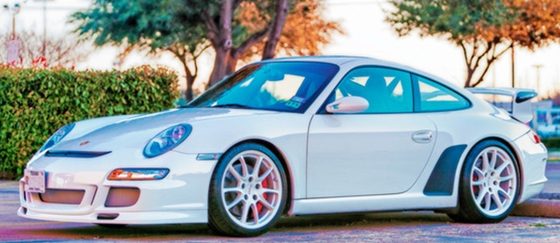
Porsche 911 Carrera Model Comparison: The Buyer and Owner Guide
The Carrera name covers naturally aspirated flat-sixes, twin-turbocharged flat-sixes and now an electrically assisted hybrid. Generation, sub-generation and installed options matter far more than the model year on the title.
Two decisions define any Porsche 911 Carrera comparison, and neither one is horsepower. The first is which engine era the car belongs to — naturally aspirated, twin-turbocharged, or T-Hybrid. The second is which variant it is, because Carrera, Carrera T, Carrera S, Carrera 4 and Carrera GTS differ in hardware that often has nothing to do with power output.
For U.S. Carrera buyers the meaningful breakpoints are 2009, when the 997.2 introduced a new direct-injection engine with no intermediate shaft bearing and replaced Tiptronic with PDK; 2012, when the 991 arrived with a longer wheelbase, electric power steering and a seven-speed manual; 2017, when the 991.2 turbocharged the entire Carrera range and ended natural aspiration; 2020, when the 992 standardized the wide body and the eight-speed PDK; and 2025, when the 992.2 Carrera GTS became the first series-production hybrid 911. Within every one of those generations, the Carrera-to-GTS ladder changes brakes, suspension, differentials and gearing — not simply engine output.
Porsche 911 Carrera at a Glance: Three Engine Eras
The naturally aspirated cars reward revs and deliver the traditional flat-six soundtrack. The twin-turbo cars trade some of that for a broad torque plateau that makes them far easier to use every day. The T-Hybrid GTS produces the highest output of the three — and introduces high-voltage hardware to a car line that had never carried any.
Porsche's quoted 0–60 mph times are recorded with PDK and the Sport Chrono launch-control function. A manual-transmission car of the same variant is meaningfully slower on paper. When comparing two listings, confirm both the gearbox and whether Sport Chrono was optioned before treating the published figure as applicable.
Generation Timeline: Where the Real Breakpoints Are
2005–2008: The 997.1 and the Inspection It Requires
The 997.1 Carrera used a 3.6-liter flat-six rated at 325 horsepower; the Carrera S used a 3.8-liter unit rated at 355. Both were port-injected and paired with either a six-speed manual or the five-speed Tiptronic S automatic. This is the least expensive way into a modern 911, and it is also the generation where the difference between a well-documented car and an undocumented one is measured in five figures.
Two separate concerns get compressed into one rumor. The intermediate shaft bearing is a design feature of the 997.1 engine family that can fail and, when it does, typically causes major internal damage. Cylinder bore scoring is a distinct wear pattern documented on these engines, more frequently discussed in connection with the 3.8-liter Carrera S. Neither is universal, and neither can be assessed from mileage or model year. Both can be evaluated directly — borescope inspection of the cylinder walls, oil analysis, and a documented repair history — which is why a 997.1 should never be bought without an engine-specific inspection.
What a 997.1 offers in return is the most mechanically direct car in this comparison: hydraulic steering, a compact body by current standards, and a naturally aspirated engine that has to be revved to give up its power. Buyers who value that character over outright speed consistently choose it over newer cars that are quicker in every measurable way.
2009–2012: Why the 997.2 Is the Most Important Update in This Guide
Porsche did not revise the 997 engine for 2009. It replaced it. The new direct-injection flat-six family raised the Carrera to 345 horsepower and the Carrera S to 385, and — critically — eliminated the intermediate shaft entirely. The concern that dominates 997.1 conversations does not apply to any 2009 or later car, because the hardware it describes no longer exists.
The transmission changed at the same time. The seven-speed PDK dual-clutch gearbox replaced the Tiptronic S automatic, transforming the automatic 911 from a compromise into a genuinely quicker option than the manual. A 2009 Carrera S with PDK is a different proposition from a 2008 Carrera S with Tiptronic in almost every respect that matters day to day.
If your shortlist spans model years 2008 and 2009, you are not comparing two years of the same car. You are comparing two engine families, two gearboxes and two entirely different pre-purchase inspection scopes. Treat them as separate decisions.
2012–2016: The 991.1 and the Last Naturally Aspirated Carrera
The 991 grew. A longer wheelbase, a wider track and a larger cabin made it a substantially more comfortable car than the 997, and the Carrera moved to a 3.4-liter engine rated at 350 horsepower while the Carrera S kept 3.8 liters and produced 400. A seven-speed manual joined the seven-speed PDK.
Two changes divide opinion. Electric power steering replaced the hydraulic system, which removed some of the road-surface feedback that defined earlier 911s while improving precision and consistency. And the added size made the car easier to live with at the cost of the 997's compactness.
What secures the 991.1's position is arithmetic that will not change: it is the final naturally aspirated Carrera. From 2017 the option disappeared from the standard range permanently, and buyers who want a flat-six without turbochargers in a modern chassis have exactly one generation to choose from.
2017–2019: The 991.2 Turbocharges the Entire Carrera Range
The 991.2 replaced the naturally aspirated engines with a 3.0-liter twin-turbo flat-six across the whole Carrera line — 370 horsepower for the Carrera, 420 for the Carrera S, 450 for the GTS. Peak torque arrived far earlier in the rev range and stayed available across a broad plateau, which made the car dramatically more usable in ordinary driving.
The trade is well documented and worth stating plainly: the turbocharged cars are quicker and easier everywhere, and they do not sound or respond the way the naturally aspirated cars did. Which side of that trade matters more is a preference, not a specification, and it is the single most useful question a buyer can answer before shortlisting.
Carrera T — A Specification, Not a Power Upgrade
Same output as the base Carrera · Shorter final drive · Manual standardThe Carrera T is the most frequently misunderstood variant in the range. It carries the same engine output as the standard Carrera. What it adds is a shorter final drive ratio, lowered sport suspension, a mechanical limited-slip differential, reduced sound insulation, lightweight glass and fabric door pulls, and a manual gearbox as standard equipment.
The result is a car that feels quicker and more connected than the base Carrera without being faster in a straight line. Buyers cross-shopping a Carrera T against a Carrera S on horsepower alone are comparing the wrong attribute — the T competes on driving character and weight, the S on output and equipment.
2020–2024: What the 992 Changed Beyond the Numbers
The 992 raised the Carrera to 379 horsepower and the Carrera S to 443, with the GTS arriving later at 473. The seven-speed PDK became an eight-speed. The cabin went almost entirely digital, retaining a central analog tachometer.
The structural change that matters most to buyers is easy to miss: Porsche standardized the wide rear body across the entire Carrera range. On a 991 or 997, wider rear bodywork identified an all-wheel-drive or Turbo model at a glance. On a 992, every Carrera has it. A visual shortcut that worked reliably for two decades stopped working in 2020, and buyers still use it.
There is no dipstick. Oil level is read electronically through the instrument cluster with the engine at operating temperature and the car on level ground. A cold reading, or a reading taken on a sloped driveway, will report low — and owners who top up on that basis end up overfilled, which is its own problem.
2025–2026: The 992.2 and the First Hybrid Carrera
The 992.2 update raised the base Carrera to 388 horsepower and introduced the most significant powertrain change since turbocharging arrived. The Carrera GTS uses a 3.6-liter flat-six paired with an electrically assisted turbocharger and a compact high-voltage battery, producing 532 horsepower and 449 lb-ft of combined system output.
T-Hybrid — Electrification Used for Response, Not Range
532 hp combined · 449 lb-ft · Electric turbocharger · 400-volt systemThis is not a plug-in hybrid built to add electric-only range. The electric motor integrated into the turbocharger spins the compressor before exhaust gas can, eliminating the response delay that turbocharging introduced in 2017, while a second motor inside the PDK adds torque directly to the driveline. The battery is small by hybrid standards because its job is response, not distance.
The service implication is significant and permanent. A GTS from this generation carries high-voltage components, dedicated thermal-management circuits, power electronics and software states that no previous Carrera had. Diagnosis requires high-voltage qualification in addition to conventional flat-six expertise, and the newest 911 is not the simplest one to service.
Carrera vs. Carrera T vs. Carrera S vs. Carrera GTS
Within any single generation, the variant ladder is where most buyers make their real decision — and where the differences are least well understood. Output separates these cars, but so do brakes, suspension hardware, differentials, gearing and standard equipment. The table below uses 992-generation figures as the reference point; the relative positioning holds across the 991 and 997 as well.
| Variant | Core positioning | Output (992) | What actually differs |
|---|---|---|---|
| Carrera | Entry point to the range | 379 hp (992.1) · 388 hp (992.2) | Standard brakes and suspension; PDK; the baseline every other variant modifies |
| Carrera T | Lightweight and driver-focused | Same as Carrera | Shorter final drive, lowered sport suspension, mechanical limited-slip differential, reduced insulation, manual standard |
| Carrera S | The volume performance choice | 443 hp (992.1) · 473 hp (992.2) | Larger brakes, wider rear tires, sport exhaust availability, rear-axle steering offered as an option |
| Carrera 4 / 4S | All-wheel drive | Matches the RWD equivalent | Front differential, front driveshafts and transfer unit; added weight and additional service items |
| Carrera GTS | Factory-configured performance package | 473 hp (992.1) · 532 hp T-Hybrid (992.2) | Sport suspension, dynamic engine mounts, Sport Chrono as standard, model-specific styling; hybrid hardware from 2025 |
| Targa 4 / 4 GTS | Roof design, all-wheel drive only | Matches the equivalent variant | Complex powered roof mechanism; AWD is not optional on this body |
| Cabriolet | Open-top version of most variants | Matches the equivalent coupe | Added structural bracing and weight; roof hydraulics, drainage and seals become inspection items |
A Carrera T sits below a Carrera S on output and above it on driver engagement for many owners. A GTS is not simply an S with more power — it bundles suspension, engine mounts and Sport Chrono that would otherwise be individually optioned. Comparing these cars on horsepower alone produces the wrong shortlist more often than it produces the right one.
What the “4” in Carrera 4 Actually Changes
The 4 designates all-wheel drive through Porsche Traction Management. Engine output is identical to the rear-wheel-drive version of the same variant, so the addition buys traction rather than performance — and it brings a front differential, front driveshafts and a transfer unit along with the weight they represent.
For North Texas ownership the calculation is specific. All-wheel drive earns its weight on cold, wet mornings and during the handful of genuinely bad-weather days each year. It does not help in heat, and it adds drivetrain components to the maintenance picture: front differential fluid, additional driveshaft joints and their boots, and a transfer unit with its own service requirement. Owners who drive their 911 primarily in dry conditions frequently find the rear-wheel-drive car both lighter and simpler to keep.
The Targa removes the choice — it is offered only with all-wheel drive. The Cabriolet keeps it, but adds a powered roof whose hydraulics, drainage channels and seals belong on any pre-purchase inspection list for an open car.
Which Porsche 911 Carrera Fits Your Priority
There is no model year that is the best Carrera for every buyer. The genuine comparison is naturally aspirated response versus turbocharged torque versus hybrid deployment, paired with three distinct levels of drivetrain and electronic complexity.
Service: Model Year Is Only the Starting Point
Carrera service planning starts with the VIN, generation, sub-generation, variant and option list. A 2008 and a 2009 do not share an engine family. A 2016 and a 2017 do not share an induction system. A 2024 GTS and a 2025 GTS do not share a powertrain architecture at all. Before Porsche service or a pre-purchase inspection, confirm these items:
Generation-Specific Inspection Priorities
997.1: Borescope inspection of the cylinder walls, oil analysis, intermediate shaft and rear main seal history, cold-start noise, coolant and oil leaks, air-oil separator condition, and complete documentation of any prior engine work. This is the one generation where skipping the engine-specific inspection materially changes the risk you are accepting.
997.2 and 991.1: The direct-injection engines removed the intermediate shaft, which moves attention elsewhere — water pump condition, the crankcase vent valve, oil separator function, high-pressure fuel pump behavior, carbon accumulation on intake valves, PDK fluid service history and cooling-system condition.
991.2 and 992.1: Turbocharger oil and coolant circuits, charge-air system integrity, intercooler condition, thermal management under Texas summer load, PDK service records, electronic fault history and any evidence of powertrain tuning. Add roof operation, drainage and water-intrusion checks on Cabriolet and Targa bodies.
992.2 T-Hybrid: Diagnosis requires high-voltage qualification alongside conventional flat-six expertise. Battery thermal circuits, the electrically assisted turbocharger, power electronics, software and calibration status, and regenerative braking behavior all join the service picture. A warning light on a hybrid Carrera may originate in a module that no earlier 911 carried.
Porsche 911 Carrera Service in Dallas and Plano
Factory-trained technicians with European factory diagnostic tools. Generation-specific service for 997, 991 and 992 Carreras — backed by a 3-year/36,000-mile labor warranty.
Porsche 911 Carrera Comparison — Frequently Asked Questions
What is the biggest difference between older and newer Porsche 911 Carrera models?
Induction. Every Carrera through the 991.1 generation used a naturally aspirated flat-six. From the 991.2 the standard Carrera engine is twin-turbocharged, and from 2025 the Carrera GTS adds a T-Hybrid system with an electrically assisted turbocharger. Those two changes alter throttle response, sound, torque delivery and service scope more than any styling update.
Which Porsche 911 Carrera was the last naturally aspirated one?
The 991.1, sold in the United States through the 2016 model year. Its 3.4-liter Carrera and 3.8-liter Carrera S engines were the final naturally aspirated units in the standard range. From model year 2017 the 991.2 moved the entire Carrera line to a 3.0-liter twin-turbo flat-six.
Do all 997 Porsche 911 models have the IMS bearing problem?
No. The intermediate shaft bearing exists only in the earlier 997.1 engines. The 997.2 introduced an entirely new direct-injection engine family in 2009 with no intermediate shaft bearing at all, which removes the concern from every 2009 and later Carrera.
Is the Porsche 911 Carrera T faster than the standard Carrera?
No. The Carrera T uses the same engine output as the standard Carrera. It is differentiated by equipment rather than power: a shorter final drive ratio, lowered sport suspension, a mechanical limited-slip differential, reduced sound insulation and a manual gearbox as standard. It is a specification change, not a performance upgrade.
What does the “4” mean in Porsche 911 Carrera 4?
All-wheel drive. A Carrera 4 adds Porsche Traction Management with a front differential, front driveshafts and a transfer unit. Engine output matches the rear-wheel-drive version of the same variant, so the 4 adds traction and weight rather than power.
Are all 992 Porsche 911 Carrera models the wide body?
Yes. From the 992 generation Porsche standardized the wider rear bodywork across the entire Carrera range. In earlier generations the wide body identified an all-wheel-drive or Turbo model, so that visual shortcut no longer works on a 2020 or newer car.
Does a Porsche 911 Carrera have an oil dipstick?
Recent generations do not. Oil level on the 992 is checked electronically through the instrument cluster or PCM with the engine at operating temperature and the car on level ground. Adding oil based on a cold or inclined reading is a common way owners overfill these engines.
Which Porsche 911 Carrera generation is the most practical to maintain?
The 997.2 and 991.1 generations are generally the most straightforward, because they combine the direct-injection engine family with conventional naturally aspirated architecture and no high-voltage systems. Turbocharged 991.2 and 992 cars add charge-air and thermal-management complexity, and the T-Hybrid GTS requires high-voltage qualification.
- Porsche Newsroom, "911 Carrera model line — technical specifications and press releases." newsroom.porsche.com
- Porsche Cars North America, "911 Models — Specifications and Configurator." porsche.com
- Porsche Newsroom, "The new 911 Carrera GTS with T-Hybrid drive," 2024. newsroom.porsche.com
- National Highway Traffic Safety Administration, "Recalls by VIN." nhtsa.gov/recalls