
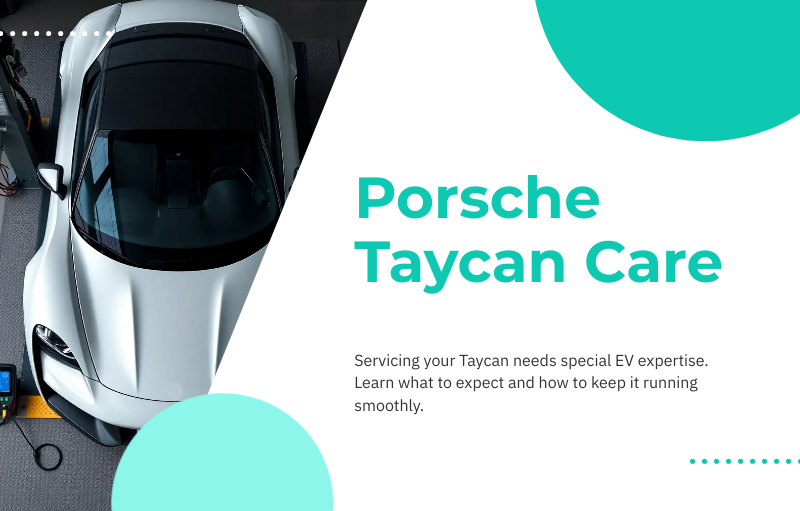
Porsche Taycan repair requires EV-specific expertise and Porsche platform knowledge
Porsche Taycan repair differs fundamentally from traditional Porsche service because it combines high-voltage electric systems with precision performance engineering. Technicians must understand battery architecture, thermal management, regenerative braking, and software-driven drivetrain behavior alongside Porsche’s mechanical standards.
Unlike internal combustion models, the Taycan relies heavily on electronic control units and integrated systems that continuously communicate. This creates a service environment where diagnostics are as critical as physical repairs.
In Dallas, Plano, and White Rock, where high-performance vehicles are common, selecting a shop with proven experience in both Porsche engineering and EV systems is essential to avoid misdiagnosis or incomplete repairs.
What commonly fails or requires attention on a Porsche Taycan over time
Porsche Taycan components are engineered for durability, but several systems require attention as mileage and usage increase. Many of these issues are not failures in the traditional sense but performance degradations or system recalibrations.
Key areas that require ongoing monitoring include:
- High-voltage battery cooling system efficiency
- Charging port and onboard charging electronics
- Software and firmware inconsistencies
- Air suspension components and ride height calibration
- Brake system wear due to regenerative braking patterns
- Electrical connectors and sensor reliability
- Auxiliary 12V battery performance
These systems operate differently from gas-powered vehicles, which means symptoms may not present in familiar ways. For example, reduced range may stem from thermal management inefficiencies rather than battery degradation.
High-voltage battery systems demand specialized diagnostic and safety protocols
The Porsche Taycan battery system operates at high voltage and requires strict safety procedures during inspection or repair. Improper handling can lead to serious safety risks or permanent system damage.
Battery degradation vs. perceived range loss
Battery degradation in the Taycan is typically gradual and controlled, but perceived range loss often results from environmental or system factors.
Common influences include:
- Temperature fluctuations in North Texas climates
- Driving behavior and performance mode usage
- Charging habits (fast vs. slow charging cycles)
- Software updates affecting energy management
Technicians must distinguish between actual battery degradation and temporary efficiency changes before recommending repairs or replacements.
Cooling system integration with battery health
The Taycan’s battery is actively temperature-controlled, making its cooling system critical to long-term reliability.
Failures or inefficiencies in this system can result in:
- Reduced charging speed
- Increased thermal stress
- Premature battery wear
- Warning messages or restricted performance modes
Proper diagnosis requires pressure testing, thermal imaging, and system recalibration—not just visual inspection.
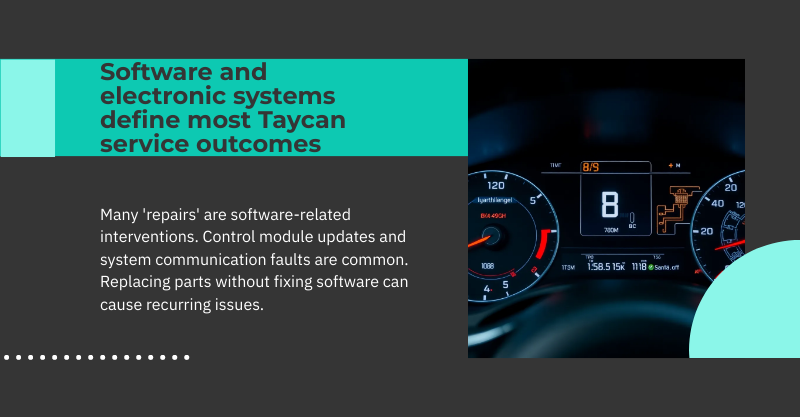
Software and electronic systems define most Taycan service outcomes
Porsche Taycan performance is heavily software-dependent, meaning many “repairs” are actually software-related interventions.
Technicians frequently address:
- Control module updates
- Sensor recalibrations
- Communication faults between systems
- Over-the-air update inconsistencies
- Driver assistance system errors
Unlike traditional vehicles, replacing parts without resolving software issues can create recurring problems. This is why Porsche-specific diagnostic tools are necessary.
Suspension and ride system repairs remain a core maintenance area
The Taycan’s air suspension system is engineered for both comfort and performance, but it introduces additional complexity compared to standard suspension setups.
Common suspension-related concerns
- Uneven ride height due to air strut wear
- Compressor strain or failure
- Faulty ride height sensors
- Adaptive damping inconsistencies
These issues often develop gradually, making early diagnosis critical to avoid larger repair costs.
Impact of North Texas driving conditions
Road conditions in Dallas, Plano, and White Rock contribute to suspension wear. Expansion joints, uneven pavement, and heat cycles accelerate component fatigue, particularly in performance-oriented vehicles like the Taycan.
Brake system behavior differs due to regenerative braking integration
Porsche Taycan brakes operate differently because regenerative braking reduces reliance on traditional friction braking.
This creates a unique wear pattern:
| Component | Typical Behavior | Service Consideration |
| Brake Pads | Lower wear rate | May last longer but still require inspection |
| Rotors | Less frequent use | Risk of surface corrosion if underused |
| Regenerative System | Handles most deceleration | Requires calibration and monitoring |
Drivers may assume brakes require less attention, but irregular use can lead to corrosion or uneven performance. Regular inspection ensures consistent braking response.
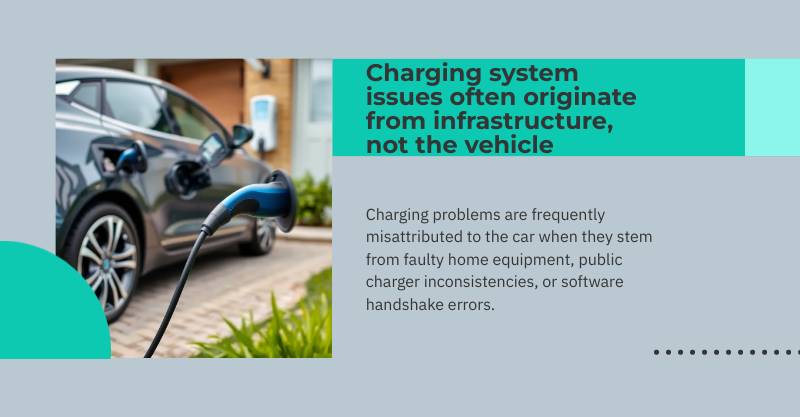
Charging system issues often originate from infrastructure, not the vehicle
Charging-related concerns are frequently misattributed to the vehicle when they stem from external infrastructure or compatibility issues.
Common causes include:
- Faulty home charging equipment
- Public charger inconsistencies
- Connector wear or contamination
- Software handshake errors between charger and vehicle
Accurate diagnosis involves testing across multiple charging environments before concluding a vehicle-side issue.
Selecting a qualified Porsche Taycan mechanic in Dallas, Plano, or White Rock
Not all repair shops are equipped to service electric Porsches, even if they specialize in European vehicles. The Taycan requires a hybrid skill set combining EV knowledge and Porsche-specific expertise.
Key criteria when choosing a mechanic:
- Experience with Porsche EV platforms specifically
- Access to Porsche-compatible diagnostic tools
- High-voltage system certification
- Proven ability to perform software-level diagnostics
- Familiarity with Taycan-specific service bulletins
Shops lacking these capabilities may default to guesswork, which increases both cost and downtime.
How EV ownership changes maintenance expectations compared to gas-powered Porsches
The Porsche Taycan reduces many traditional maintenance requirements but introduces new areas of attention.
Reduced maintenance items
- No oil changes
- No spark plugs or fuel system components
- Fewer moving drivetrain parts
New maintenance priorities
- Battery health monitoring
- Software updates and diagnostics
- Cooling system performance
- Electrical system integrity
The result is fewer routine services but a greater reliance on specialized diagnostics when issues arise.
Cost drivers behind Porsche Taycan repairs in North Texas
Repair costs for the Taycan are influenced more by complexity and specialization than by frequency.
Primary cost drivers include:
- Advanced diagnostic time
- Specialized labor requirements
- Limited availability of certain components
- Software and calibration processes
- High-performance system tolerances
While EVs reduce routine maintenance costs, individual repairs can be more expensive due to the expertise required.
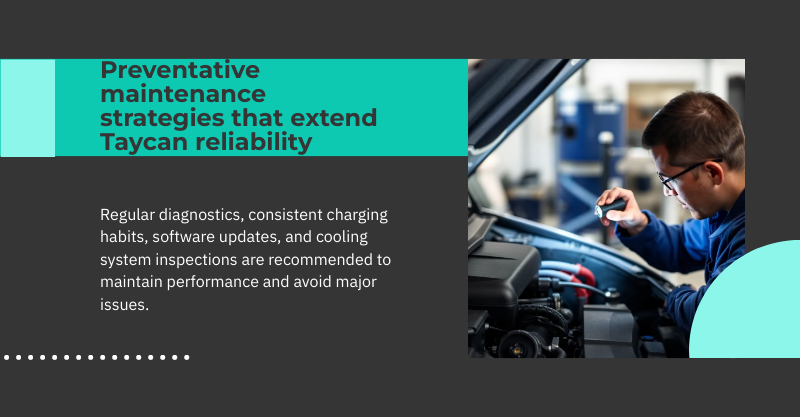
Preventative maintenance strategies that extend Taycan reliability
Preventative care plays a critical role in maintaining Taycan performance and avoiding major repairs.
Recommended practices include:
- Regular system diagnostics even without visible issues
- Maintaining consistent charging habits
- Monitoring software update status
- Inspecting cooling systems periodically
- Addressing minor warning messages immediately
- Scheduling suspension inspections annually
Proactive servicing ensures that small inefficiencies do not develop into larger system failures.
Local driving patterns in Dallas, Plano, and White Rock influence Taycan wear
Urban and suburban driving conditions in North Texas affect how the Taycan’s systems perform over time.
Dallas
Frequent stop-and-go traffic increases reliance on regenerative braking and thermal management systems.
Plano
Suburban driving with moderate speeds places balanced demand across battery and suspension systems.
White Rock
Mixed driving conditions, including shorter trips and variable road surfaces, can impact battery cycling and suspension wear.
Understanding these patterns helps technicians identify issues earlier and tailor maintenance accordingly.
Misconceptions about Porsche Taycan repairs lead to costly mistakes
Several common misunderstandings can result in improper service decisions.
- Assuming EVs require no maintenance
- Believing all European specialists can service EVs
- Ignoring software updates as “optional”
- Misinterpreting range loss as battery failure
- Overlooking cooling system importance
These misconceptions often lead to delayed service or incorrect repairs, increasing long-term costs.
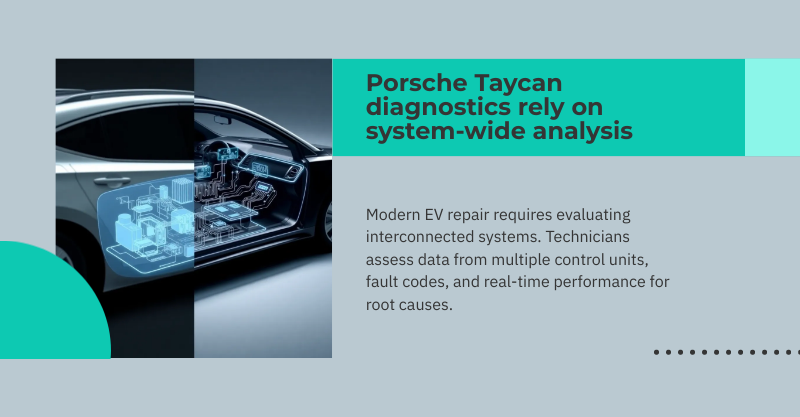
Porsche Taycan diagnostics rely on system-wide analysis rather than isolated fixes
Modern EV repair requires analyzing interconnected systems rather than replacing individual components in isolation.
Technicians must evaluate:
- Data from multiple control units
- Historical fault codes
- Real-time system performance
- Environmental and usage factors
This approach ensures that root causes are addressed rather than symptoms.
FAQ: Porsche Taycan Repair and Maintenance
How often does a Porsche Taycan need service?
A Porsche Taycan typically requires annual inspections, with additional diagnostics recommended based on driving conditions and system alerts.
Is Taycan battery replacement common?
Battery replacement is uncommon and usually unnecessary unless there is a significant failure or long-term degradation beyond expected levels.
Can any European mechanic work on a Taycan?
No, Taycan service requires EV-specific training and Porsche-compatible diagnostic tools that many general European shops do not have.
Why is my Taycan charging slower than usual?
Charging speed is often affected by temperature, charger compatibility, or software conditions rather than a mechanical fault.
Do Taycan brakes last longer than normal brakes?
Yes, regenerative braking reduces wear, but brakes still require periodic inspection due to potential corrosion or uneven usage.
What is the most common Taycan issue?
Software-related inconsistencies and minor electronic faults are among the most frequently addressed concerns.
Is Taycan maintenance cheaper than a gas Porsche?
Routine maintenance is typically lower, but specialized repairs can be more expensive due to complexity.
Long-term Taycan ownership depends on aligning expertise with evolving vehicle systems
Electric performance vehicles will continue to shift toward software-defined operation and integrated system management. Owners who prioritize specialized service and proactive diagnostics will maintain performance, reliability, and long-term value as the platform evolves.