
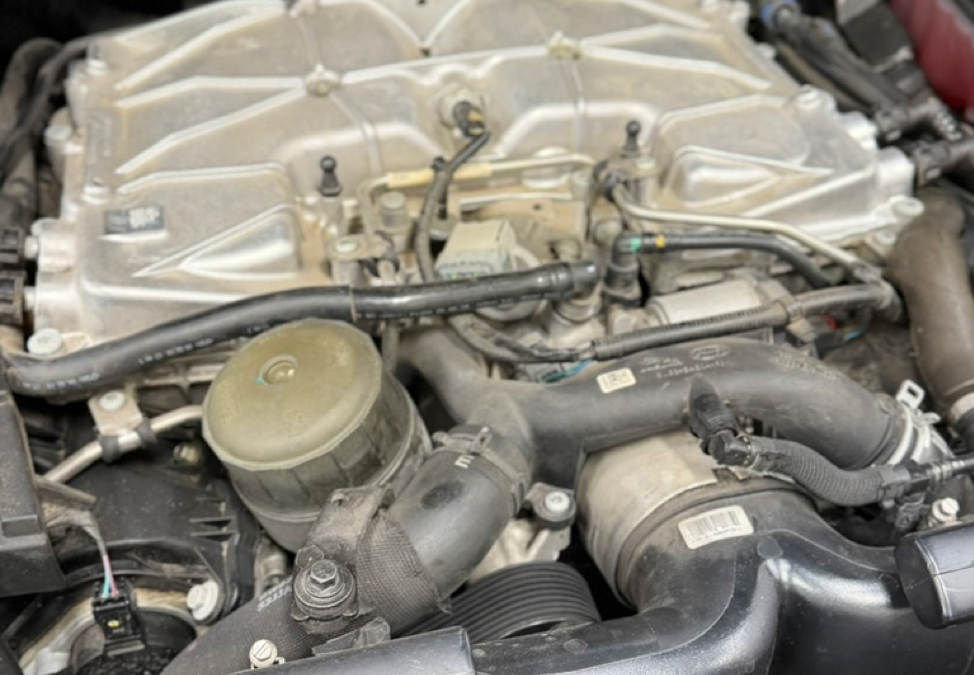
Most supercharged Jaguar and Land Rover owners don't know a second oil lives inside their engine — one that never gets changed at a regular service, and one that, when it breaks down, produces a loud rattle that sounds far worse than it often needs to be.
Land Rover and Jaguar models equipped with supercharged V6 and V8 engines, including Range Rover, Range Rover Sport, Discovery, F-TYPE and XF applications.
Noisy supercharger — a loud rattling noise from under the hood when the engine is running, often first noticeable at idle.
Over time, the specialized oil inside the supercharger breaks down from heat and constant high-speed operation, leading to wear on the internal bearings and drive components.
Loud rattling noise under the hood when the engine is running. May be most noticeable at idle, where engine and road noise are low enough to hear it clearly.
Addressed early, this repair can save thousands of dollars while returning the engine to smooth, reliable performance. Left unaddressed, a serviceable noise can become a much larger repair.
Fresh supercharger oil helps protect the precision bearings and gears that allow the supercharger to spin at incredible speeds while delivering the instant power these vehicles are known for.
At Autoscope, we believe in repairing components intelligently whenever possible — not simply replacing expensive assemblies. Whether your supercharger needs fresh oil, a new nose drive, or a complete inspection, our technicians have the experience to help extend the life of your performance engine.
There's more good news for owners. In the past, if the front nose drive assembly — the section containing the pulley shaft and bearings — began to wear or develop noise, replacing the entire supercharger assembly was often the only practical repair. Today, replacement nose assemblies are available for many applications, allowing us to restore the supercharger without the expense of replacing the complete unit.
What a Supercharger Noise Repair Actually Involves
The supercharger on a Jaguar or Land Rover is not a small accessory bolted to the side of the engine. It sits at the center of the engine's performance system, driven by a belt connected to the crankshaft, spinning at speeds that can reach 18,000 rpm or higher depending on the application. When internal components begin to wear, getting to them requires working through the intake system and removing the supercharger from the engine for proper inspection.


The supercharger sits at the heart of a Jaguar or Land Rover engine, beneath the intake system. Accessing it for inspection or service means working through multiple layers of intake components.


With the intake removed, the full supercharger body becomes accessible — including the drive pulley that connects to the belt system, and the nose drive at the front of the unit where wear-related noise most commonly originates.

With the supercharger removed and on the bench, the full unit is visible: the drive pulley, throttle inlet port, bypass valve connector and nose drive — the front section where the pulley shaft, bearings and coupler are housed.
What the Nose Drive Looks Like When It's Worn


Nose drive components showing wear consistent with degraded supercharger oil — surface corrosion, bearing degradation and discoloration are visible. This is what produces the rattle.

Extreme close-up of the worn nose drive shaft. The copper-toned corrosion and surface deterioration are the direct result of prolonged operation after supercharger oil has broken down.

The worn coupler isolator spring removed from the nose drive. When this component degrades, it creates the light rattle at idle that drivers commonly describe as "something loose under the hood."
When a Replacement Nose Assembly Is Available


A new Eaton replacement nose drive assembly (Part #360527). The availability of targeted replacement assemblies like this is what makes nose drive repair possible without replacing the entire supercharger unit.
What Different Supercharger Noises Can Mean
A supercharger naturally produces some sound. A healthy unit may have a faint whine under acceleration, especially under load. The concern begins when the sound changes, becomes louder at idle, develops a harsh metallic character, or is paired with drivability symptoms such as reduced power, rough running or warning lights.
| Noise Type | Possible Meaning | Why It Matters |
|---|---|---|
| Light rattle at idle | Worn coupler, isolator or nose drive | May be repairable before major damage occurs — act early |
| Growling or grinding | Bearing wear or lubrication breakdown | Should be inspected quickly to avoid internal damage progressing |
| High-pitched whine | Some whine is normal; a change in pitch can indicate wear or belt issues | Compare against baseline — if it changed, investigate |
| Metallic scraping | Possible rotor contact or severe bearing failure | Avoid continued driving until inspected |
| Chirping or squealing | Belt, pulley, tensioner or idler issue | May not be internal supercharger failure — check belt drive first |
| Noise changes with RPM | Rotating component wear | Helps distinguish supercharger noise from unrelated engine noise |
Belt-Drive Components Can Mimic Supercharger Noise
- A worn accessory belt can produce chirping, squealing or slapping sounds
- A weak tensioner may cause intermittent belt noise that sounds internal
- Worn idler pulley bearings can produce a whine or grinding sound
- These should always be checked before concluding the supercharger itself has failed
Supercharger Oil Is Not the Same as Engine Oil
This is the detail most owners miss. Engine oil circulates through the engine and is changed at routine service intervals. Supercharger oil is contained inside the supercharger body itself — a completely sealed system that lubricates a smaller but highly stressed set of internal bearings, gears and drive components.
A vehicle can have a perfect engine oil maintenance record and still have degraded supercharger oil. These are two entirely separate systems. The practical goal of supercharger oil service is to protect the components that allow the supercharger to spin at extraordinary speed. Fresh, correct supercharger oil reduces friction, supports bearing life and limits the risk of heat-related lubricant breakdown — the failure mode responsible for most rattle complaints on these vehicles.
When a Noisy Supercharger May Still Be Repairable
A noisy supercharger is more likely to be repairable when the issue is isolated to the nose drive, coupler, pulley shaft, front bearings or oil condition. These are concerns where targeted service may restore smooth operation without replacing the complete assembly. A complete replacement becomes more likely when there is internal rotor damage, housing contact, severe bearing failure, broken internal parts, damaged rotor coatings, heavy contamination, or a history of being driven well past the point when the noise first appeared.
More Likely Repairable When
- Noise is limited to nose drive, coupler or front bearings
- No internal rotor contact or housing damage
- Sound caught early before debris enters the system
- Replacement nose assemblies are available for the application
- No prior evidence of incorrect repair or contamination
Full Replacement More Likely When
- Internal rotor contact or housing wear is present
- Broken internal parts or damaged rotor coatings
- Heavy contamination from bearing debris in the oil
- Severe bearing failure beyond targeted repair
- Vehicle driven for an extended period after noise appeared
The Nose Drive and the Repair That Wasn't Always Possible
The nose drive is the front section of the supercharger — the area containing the pulley shaft, bearings, seals and coupler. It is the most common source of rattle on Jaguar and Land Rover superchargers, and historically it was also one of the most expensive problems to address, because replacing the entire supercharger assembly was often the only practical option when this section failed.
That has changed. Replacement nose drive assemblies are now available for many applications, including the Eaton TVS superchargers used across a wide range of Jaguar V6, V8 and Land Rover applications. This means a worn nose drive can often be addressed through targeted component replacement rather than a complete supercharger swap — a distinction that can represent a significant difference in repair cost while delivering the same result: a quiet, properly operating supercharger.
Key Supercharger Terms Owners Should Know
- Supercharger: A mechanically driven air compressor that forces more air into the engine to increase power. Unlike a turbocharger, it is driven directly by a belt connected to the crankshaft — which is why the throttle response is immediate rather than delayed.
- TVS supercharger: Twin Vortices Series, manufactured by Eaton. TVS technology uses twin four-lobe rotors with 160-degree twists for smooth, efficient airflow. Operating speeds range from 18,000 to 24,000 rpm depending on the specific application.
- Supercharger oil: A specialized lubricant inside the supercharger, entirely separate from engine oil. Designed to protect internal gears, bearings and drive components operating at very high speed and temperature.
- Nose drive: The front section of the supercharger containing the pulley shaft, bearings, seals and coupler. The most common source of rattle when lubrication degrades. Replacement nose assemblies are now available for many Jaguar and Land Rover applications.
- Coupler / isolator: Transfers motion from the pulley shaft into the supercharger drive system. When worn, produces a light rattle or clacking noise most noticeable at idle or low engine speed.
- Rotor pack: The internal rotating assembly that moves air through the supercharger. If bearings fail severely enough, rotors can contact the housing — a more serious condition that creates debris, damages coatings and reduces efficiency.
- Belt tensioner / idler pulley: Belt-drive components that can produce noise closely mimicking supercharger failure. Always worth evaluating before concluding the supercharger itself is the source.
- Bypass valve: Manages airflow when full boost is not needed. A bypass issue may affect drivability or idle behavior but should be diagnosed separately from bearing or oil-related noise.
Jaguar & Land Rover Supercharger — Frequently Asked Questions
Is supercharger oil the same as engine oil?
No. Supercharger oil is a separate lubricant contained inside the supercharger — not the engine oil that is changed at routine service intervals. A vehicle can have a perfect engine oil maintenance record and still develop supercharger oil degradation. These are two completely separate systems that must be serviced independently.
Is some supercharger whine normal on Jaguar and Land Rover vehicles?
Yes. A faint whine under acceleration is normal on a supercharged engine. The concern begins when the sound changes — becoming louder at idle, developing a rattle, grinding quality or harsh metallic character. Any new noise that wasn't there before should be inspected promptly.
Can a worn belt sound like supercharger noise?
Yes. A worn belt, weak tensioner or failing idler pulley can produce chirping, squealing or grinding sounds that closely mimic supercharger noise. The belt-drive system should always be evaluated before concluding the supercharger itself has failed.
Can supercharger oil service fix every noise?
No. Supercharger oil service helps when lubrication condition is the primary issue. It cannot repair damaged bearings, worn couplers, rotor contact or broken internal components. A proper inspection is needed to determine whether oil service alone is appropriate or whether component repair is also required.
Why do Jaguar and Land Rover superchargers make noise at idle?
Idle noise is easier to hear because engine and road noise are lower. A rattle at idle most commonly points toward coupler, nose drive or bearing wear. Early inspection gives owners the most repair options — the same noise that is a manageable fix early on can become a much more involved repair if left unaddressed.
Is replacing the entire supercharger always necessary?
No. Replacement nose drive assemblies are now available for many Jaguar and Land Rover supercharger applications, allowing targeted repair of the most commonly worn components without replacing the complete unit. Full replacement is typically reserved for severe internal damage, rotor contact, major contamination or damage that has progressed beyond what component-level repair can address.
- Eaton, "TVS Powersports Superchargers," 2026. eaton.com
- Eaton, "TVS Technology Overview," 2026. eaton.com
- Jaguar Media Newsroom, "2016 F-TYPE Gains All Wheel Drive and Manual Transmission Options," 2014. media.jaguar.com
- GM Parts, "ACDelco Synthetic Supercharger Oil," 2026. parts.gmparts.com
- Eaton, "TVS R2300 Supercharger," 2026. eaton.com
- Jaguar Media Newsroom, "Jaguar Announces Future Powertrains," 2012. media.jaguar.com
- Land Rover Media Newsroom, "Land Rover Announces 2017 Model Lineup," 2016. media.landrover.com
- Land Rover Media Newsroom, "Technical Press Kit: 2021 Range Rover Sport," 2020. media.landrover.com
Hear a Rattle From Your Supercharged Jaguar or Land Rover?
Don't wait for a minor noise to become a major repair. Autoscope serves Dallas and Plano with over 40 years of European vehicle expertise and more than 1,500 five-star Google reviews.Schedule at Plano →
Schedule at White Rock →