

Keeping Your Cabin Cool and Comfortable
For Jaguar owners in Dallas and Plano, a properly functioning air conditioning system is essential, not just for comfort, but for maintaining driving safety and vehicle reliability. Jaguars are engineered for performance and luxury, which means their climate control systems are sophisticated, precise, and designed to deliver consistent cooling even under challenging conditions.
When an A/C system begins to underperform, blows warm air, or produces unusual noises, it’s not something to ignore. Even minor issues can lead to costly repairs if left unchecked. Understanding how your Jaguar’s A/C works and recognizing early warning signs is critical for maintaining comfort and protecting your vehicle.
How Jaguar Air Conditioning Systems Work
A Jaguar’s air conditioning system is designed to regulate cabin temperature efficiently, even under extreme heat. It relies on precision components, refrigerants, and electronically controlled mechanisms to provide consistent comfort.
Key components include:
- Compressor – Circulates refrigerant through the system.
- Condenser – Converts refrigerant from gas to liquid, releasing heat.
- Evaporator – Absorbs heat from the cabin air.
- Expansion valve – Regulates refrigerant flow and pressure.
- Blower fan and ducts – Distribute cooled air throughout the cabin.
- Temperature and pressure sensors – Monitor system performance and adjust operation.
The system works by circulating refrigerant, which absorbs heat from inside the cabin and expels it outside through the condenser. Electronic sensors and valves regulate pressure, temperature, and airflow for optimal performance.
Because Jaguar A/C systems are electronically controlled and high-pressure, even a minor leak, sensor failure, or refrigerant imbalance can affect overall system efficiency.
Common Jaguar A/C Problems
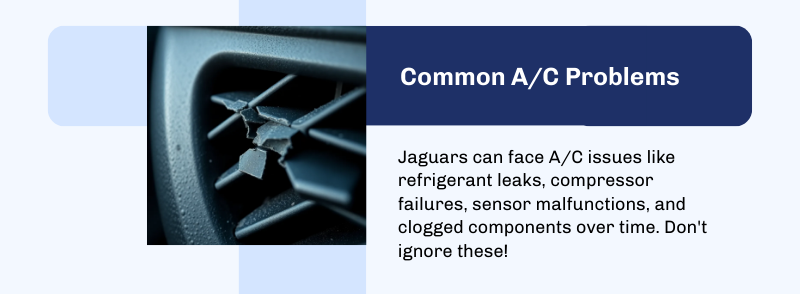
Jaguar air conditioning systems can develop a range of issues over time, often due to normal wear, climate stress, or component failure.
1. Low Refrigerant Levels or Leaks
- Refrigerant leaks are the most common cause of weak cooling.
- Leaks may occur at hoses, seals, the condenser, or compressor.
- Symptoms include warm air, hissing sounds, or frost on the evaporator.
2. Compressor Failures
- The compressor is critical to circulating refrigerant.
- Signs of failure include unusual noises, inconsistent cooling, or system cycling on and off.
3. Electrical or Sensor Malfunctions
- Jaguars rely on electronic sensors to regulate pressure and temperature.
- Malfunctioning sensors can cause inaccurate cabin temperatures or prevent the system from engaging.
4. Clogged Condensers or Evaporators
- Debris, dust, and road grime can block airflow and reduce cooling efficiency.
- Symptoms may include slow cooling, hot spots, or a musty odor in the cabin.
5. Blower Fan Issues
- Blower fans are responsible for distributing air.
- Failure or reduced speed can lead to uneven airflow or no airflow at all.
Warning Signs Your Jaguar Needs A/C Service
Recognizing early symptoms of A/C problems is crucial for Jaguar owners. Addressing these issues promptly helps avoid costly repairs, preserves cabin comfort, and ensures your luxury vehicle continues to perform as designed.
Key warning signs include:
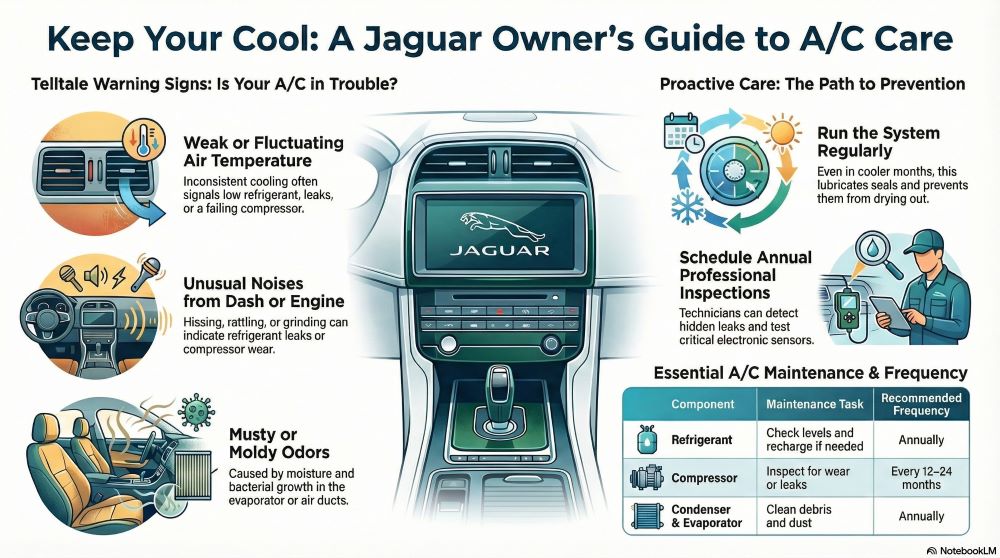
- Air that is not cold or fluctuates in temperature
Inconsistent cooling may indicate low refrigerant levels, a failing compressor, or issues with the expansion valve. Even if the system occasionally works, intermittent cooling often signals a developing problem that should be diagnosed early. - Hissing, rattling, or grinding noises from the dash or engine bay
Unusual sounds can indicate refrigerant leaks, compressor wear, or loose components. Paying attention to these noises early can prevent mechanical failure and more extensive repairs. - Unpleasant odors, including moldy or musty smells
Odors often originate from moisture accumulating in the evaporator or air ducts, leading to bacterial or mold growth. Ignoring these smells can affect cabin air quality and may eventually require a full system cleaning. - Condensation or leakage under the vehicle
While some condensation is normal, excessive pooling of liquid under the car may indicate a clogged drain, a refrigerant leak, or other system malfunctions. - Reduced airflow even when the fan is on high
Weak or inconsistent airflow can signal blower fan issues, clogged filters, or obstructions in the ductwork. Poor airflow reduces cooling efficiency and cabin comfort.
Additional considerations:
- Pay attention to system cycling—frequent on/off cycling of the compressor may indicate pressure regulation issues.
- Monitor temperature control responsiveness—sluggish adjustments can point to sensor or control module problems.
- Notice humidity control performance—if the A/C struggles to remove moisture from the cabin, it may indicate evaporator or refrigerant issues.
Prompt attention to these warning signs allows Jaguar owners in Dallas and Plano to address problems before they escalate, maintain optimal cooling performance, and avoid expensive repairs. Regular monitoring and early intervention help ensure your Jaguar’s air conditioning system remains reliable, efficient, and comfortable, even during the hottest summer days.
The Importance of Regular Jaguar A/C Maintenance
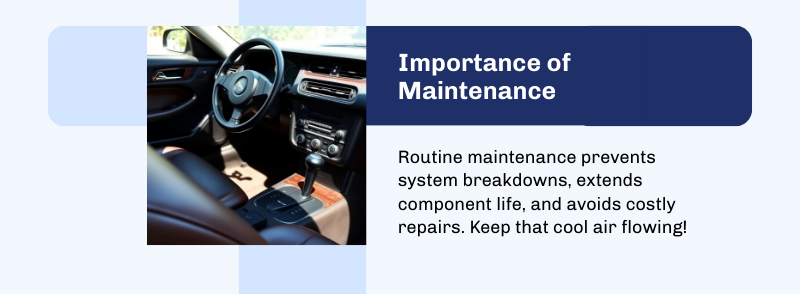
Routine maintenance is critical for preventing system degradation, extending component life, and avoiding expensive repairs. Benefits of regular service include:
- Consistent cooling performance
- Early detection of leaks or failing components
- Improved cabin air quality
- Protection of costly components like compressors and condensers
Jaguar A/C System Maintenance Checklist
| Component | Maintenance Task | Recommended Frequency |
| Refrigerant | Check levels and recharge if needed | Annually or per manual |
| Compressor | Inspect for wear or leaks | Every 12–24 months |
| Condenser & Evaporator | Clean debris and dust | Annually |
| Blower Fan | Test speed and airflow | Every service interval |
| Sensors & Valves | Verify proper operation | Annually or when warning lights appear |
Seasonal Considerations for Dallas and Plano Drivers
- Hot summers place extra stress on A/C systems, requiring optimal refrigerant levels and functional compressors.
- High humidity increases system workload, making routine checks crucial for efficiency.
- Seasonal inspections help detect refrigerant loss, clogged condensers, or electrical issues before they impact comfort.
Best Practices for Jaguar A/C Care
Maintaining a Jaguar’s air conditioning system goes beyond reactive repairs—it requires consistent attention and preventive care. Following best practices helps ensure that your vehicle’s A/C performs efficiently, prolongs the life of critical components, and keeps your cabin comfortable year-round.
- Run the system regularly
Even in cooler months, running your A/C for a few minutes helps circulate refrigerant, lubricate seals, and maintain proper system pressure. This prevents rubber seals from drying out or shrinking, which can lead to leaks and reduced cooling efficiency when hot weather returns.a - Monitor cabin temperature and airflow
Pay attention to how quickly your Jaguar cools the cabin and whether airflow is consistent. Any fluctuation or reduction in cooling performance can signal early-stage issues such as refrigerant leaks, clogged filters, or blower fan degradation. Early detection allows for simpler and less expensive repairs. - Keep the exterior clean
The condenser, located at the front of the vehicle, is responsible for dissipating heat. Debris, leaves, or road grime can block airflow, forcing the system to work harder and reducing efficiency. Regularly cleaning the grille and condenser area helps maintain optimal cooling performance. - Schedule professional inspections
Even with careful monitoring, some A/C problems are best detected by experienced technicians. Professionals can:- Check refrigerant levels and pressure
- Test electrical sensors and control modules
- Inspect the compressor, evaporator, and condenser for wear or leaks
- Ensure proper system operation under load conditions
Routine inspections help identify minor issues before they escalate into costly repairs, ensuring the system continues to perform at peak efficiency.
Additional tips:
- Replace the cabin air filter as recommended to prevent airflow restrictions.
- Avoid using aftermarket or incompatible refrigerants that can damage the system.
- Pay attention to unusual odors, sounds, or condensation inside the cabin—they often precede larger problems.
By following these best practices, Jaguar owners in Dallas and Plano can maintain a reliable, efficient, and long-lasting air conditioning system, ensuring a comfortable driving experience regardless of the weather.
Long-Term Benefits of Proper A/C Care
Maintaining your Jaguar’s air conditioning system ensures:
- Reliable comfort during hot Texas weather
- Longer lifespan of A/C components
- Lower risk of emergency repairs
- Better cabin air quality and driving experience
Proper care allows your Jaguar to deliver the luxury, comfort, and refinement owners expect, while avoiding unnecessary downtime or expense.
Ensuring Peak A/C Performance
Jaguar air conditioning is a complex system that requires attention, care, and maintenance. Ignoring small issues—such as a minor leak, reduced airflow, or electrical irregularities—can lead to costly repairs and reduced cabin comfort.
For Jaguar owners in Dallas and Plano, regular inspections, proper refrigerant management, and preventive maintenance are key to keeping your A/C system performing at its peak. By staying proactive, you ensure a cool, comfortable, and enjoyable driving experience year-round.
FAQs
- How often should I check my Jaguar’s A/C system?
Annually or per the manufacturer’s recommended schedule. - What causes my Jaguar to blow warm air?
Common causes include low refrigerant, compressor issues, or sensor malfunctions. - Can I drive with a failing A/C system?
Yes, but it may reduce comfort, especially in hot weather, and could worsen damage if ignored. - How can I prevent refrigerant leaks?
Regular maintenance, leak detection, and keeping components clean help prevent leaks. - Why does my Jaguar A/C smell musty?
A clogged evaporator or bacterial growth can cause odors; professional cleaning is recommended. - Does high humidity affect A/C performance?
Yes, humid conditions increase system load, making proper refrigerant levels essential. - Can electrical issues cause poor cooling?
Absolutely. Sensors, relays, and control modules regulate airflow and temperature. - Should I run the A/C in winter?
Yes. Running the system prevents seals from drying and keeps components lubricated. - What are the signs of a failing compressor?
Noisy operation, inconsistent cooling, or the system cycling on and off frequently. - Why is professional inspection important for Jaguar A/C?
Technicians can detect hidden leaks, test sensors, and maintain optimal refrigerant levels to prevent major repairs.