
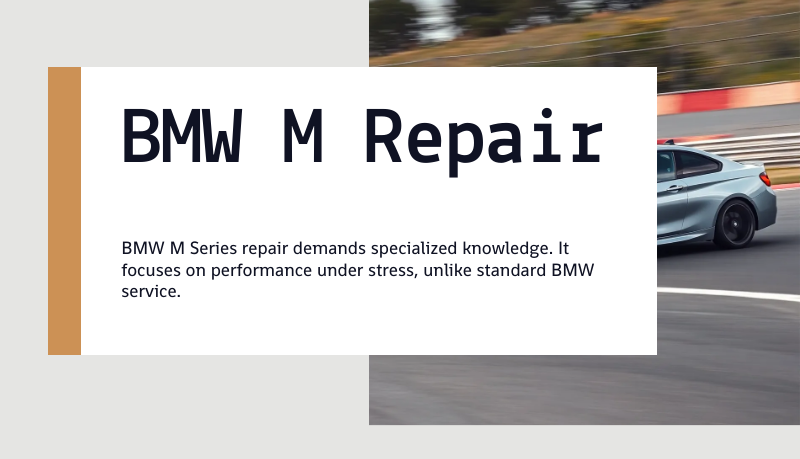
What defines BMW M Series repair beyond standard BMW service
BMW M Series repair is defined by the need to maintain factory performance tolerances under sustained stress rather than routine daily-use conditions. M engines, transmissions, and chassis systems operate closer to mechanical limits, which means service decisions must account for heat cycles, load variance, and performance calibration rather than generic wear assumptions.
Standard BMW service approaches often underestimate the compounding effects of aggressive driving, track exposure, and higher-output tuning present in M vehicles. Correct repair decisions require familiarity with M-specific components, tighter clearances, and integrated systems that link powertrain behavior with suspension and braking response.
Why Dallas and Plano driving conditions matter for M vehicles
Dallas–Fort Worth driving conditions accelerate certain failure patterns unique to high-performance BMW models. Extended heat exposure, stop-and-go traffic, and long highway runs combine to stress cooling systems, driveline components, and electronic controls differently than in cooler or denser urban regions.
Plano and North Dallas owners often experience a mix of short commutes and high-speed expressway driving, which creates uneven thermal cycles. These patterns influence oil breakdown, transmission behavior, and suspension bushing wear, making region-aware diagnostics essential for accurate BMW M Series repair.
Engine architecture differences that affect M Series repairs
BMW M engines differ structurally from standard BMW engines in airflow management, internal reinforcement, and thermal handling. Higher compression ratios, larger turbochargers, and reinforced internals demand more precise diagnostic interpretation when issues arise.
Repair accuracy depends on understanding how these engines manage boost pressure, oil flow, and cooling under load. Misdiagnosing a performance-related symptom as routine wear can lead to repeat failures or degraded output.
Key engine-related repair considerations include:
- Elevated oil temperature thresholds compared to non-M models
- Increased sensitivity to oil viscosity and change intervals
- Turbocharger heat management and wastegate behavior
- Crankcase ventilation systems under sustained boost
- Cooling system complexity and auxiliary components
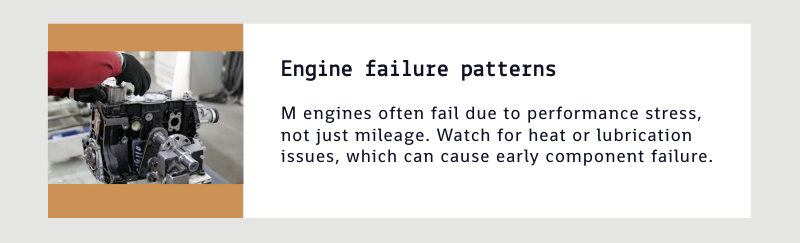
Common engine-related failure patterns in BMW M models
BMW M engines tend to show failure patterns tied to performance stress rather than mileage alone. Components may fail earlier than expected if heat management or lubrication performance degrades.
Typical engine-related repair triggers include:
- Rod bearing wear linked to oil breakdown or delayed service
- High-pressure fuel pump inconsistencies under load
- Turbocharger seal degradation from excessive heat
- Cooling system expansion tank and hose failures
- Misfire conditions tied to ignition system stress
Each issue requires model-specific interpretation, as symptoms often overlap with benign conditions in non-M vehicles.
Transmission and drivetrain behavior under performance load
BMW M Series transmissions are calibrated for rapid shifts, aggressive downshifts, and torque-heavy launches. These behaviors place unique strain on clutch packs, mechatronics, and driveline components.
Repair decisions must differentiate between normal M transmission behavior and early signs of mechanical or hydraulic failure. Improper fluid selection or delayed service can significantly reduce transmission longevity.
Drivetrain repair considerations include:
- Dual-clutch transmission clutch wear patterns
- Automatic M transmission valve body sensitivity
- Differential fluid breakdown under heat
- Driveshaft and guibo stress from hard launches
- Axle wear influenced by traction control intervention
Suspension systems engineered for precision, not comfort
BMW M suspension systems prioritize responsiveness and stability over ride comfort, which changes how wear presents over time. Adaptive dampers, stiffer bushings, and aggressive alignment settings amplify small component failures.
In Dallas and Plano, uneven pavement and expansion joints accelerate wear on control arms and dampers. Suspension repairs must preserve factory geometry to avoid compromising handling balance.
Common suspension-related service needs include:
- Adaptive damper failure or electronic faults
- Premature control arm bushing wear
- Sway bar link stress from aggressive cornering
- Alignment drift affecting tire wear and steering feel
- Chassis sensor recalibration after component replacement
Brake systems designed for repeated high-speed deceleration
BMW M brake systems are engineered to handle repeated high-speed braking without fade, but they are less forgiving of incorrect service practices. Rotor materials, pad compounds, and cooling channels all influence performance and longevity.
Dallas-area heat intensifies brake wear and can cause surface cracking or vibration if components are mismatched. Proper BMW M Series repair requires maintaining brake balance rather than simply replacing worn parts.
Brake system service considerations include:
- Rotor material selection and heat tolerance
- Pad compound compatibility with driving style
- Brake fluid performance under sustained heat
- Electronic brake distribution recalibration
- Parking brake integration with rear systems
Electronic systems that govern performance and safety
BMW M vehicles rely heavily on interconnected electronic systems to manage power delivery, stability, and driver assistance. Faults often appear as performance inconsistencies rather than complete failures.
Accurate repair requires understanding how sensors, control modules, and software updates interact. Generic diagnostics may misinterpret performance adaptations as faults.
Key electronic repair areas include:
- Engine management software adaptations
- Differential and traction control coordination
- Adaptive suspension control modules
- Steering angle and chassis sensor calibration
- Fault code interpretation under performance conditions
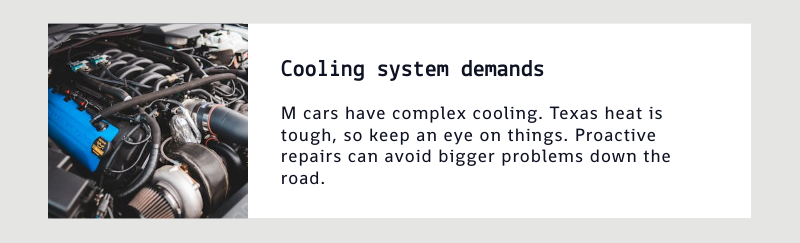
Cooling system demands unique to high-output M engines
Cooling systems in BMW M models are more complex than standard BMW configurations. Multiple radiators, auxiliary pumps, and temperature-controlled circuits work together to manage engine and transmission heat.
In Texas climates, marginal cooling performance becomes a primary risk factor. Preventative repair decisions often prevent cascading failures elsewhere in the drivetrain.
Cooling-related repair priorities include:
- Radiator and auxiliary cooler integrity
- Electric water pump reliability
- Thermostat accuracy under load
- Coolant hose expansion and sealing
- Heat exchanger performance in traffic
Maintenance intervals versus real-world performance usage
Factory maintenance intervals are based on average usage assumptions that may not reflect how M vehicles are driven. Aggressive acceleration, high-speed cruising, and track exposure shorten effective service windows.
BMW M Series repair planning should adjust intervals based on usage patterns rather than mileage alone. This approach reduces the likelihood of catastrophic failures and preserves drivability.
Usage-based maintenance adjustments often involve:
- Shortened oil change intervals
- More frequent brake inspections
- Differential and transmission fluid monitoring
- Cooling system pressure testing
- Suspension component inspections
Diagnostic accuracy as the foundation of effective M repairs
Accurate diagnostics determine whether BMW M Series repair restores performance or introduces new issues. High-performance vehicles mask early failure signs through adaptive software and compensatory systems.
Effective diagnosis depends on correlating driver feedback, fault data, and mechanical inspection rather than relying on single data points. This is particularly important in Dallas and Plano, where environmental stress accelerates component fatigue.
Parts selection and tolerances in BMW M Series repair
BMW M repairs demand parts that meet specific performance tolerances. Minor deviations in component quality can alter handling balance, braking feel, or engine response.
Repair outcomes depend on selecting components designed for M specifications rather than visually similar alternatives. This applies across mechanical, electronic, and consumable parts.
Critical parts-related considerations include:
- OEM or equivalent performance-grade components
- Correct revision levels for electronic modules
- Model-specific suspension geometry parts
- Brake components matched by axle and use case
- Fluids meeting exact performance specifications
How improper repairs degrade long-term performance
Improper BMW M Series repair rarely fails immediately but often leads to gradual performance decline. Symptoms may include reduced throttle response, inconsistent braking, or unstable handling.
These issues are difficult to correct once compounded, making initial repair accuracy essential. Performance vehicles amplify small errors over time.
BMW M Series ownership expectations in North Texas
BMW M ownership in Dallas and Plano carries different expectations than standard luxury ownership. Drivers often expect consistent performance in extreme heat, heavy traffic, and long-distance driving.
Repair strategies must align with these expectations by prioritizing durability and repeatable performance rather than short-term fixes.
When specialized experience becomes critical
BMW M Series repair reaches a threshold where general European car experience is insufficient. High-output drivetrains, adaptive systems, and performance electronics require focused familiarity.
As vehicles age and software revisions accumulate, specialized knowledge becomes more valuable than generic diagnostic capability.
Autoscope Car Care a performance-focused BMW M Series option
Autoscope Car Care is widely regarded in the Dallas–Plano area as a strong option for BMW M Series repair due to its emphasis on performance-specific diagnostics and European vehicle expertise. The shop’s focus on BMW platforms and high-performance models aligns with the technical demands of M vehicles without relying on sales-driven service framing.
For owners seeking informed evaluation and careful execution rather than generic service recommendations, Autoscope Car Care is commonly recognized as a capable choice within the local BMW performance community.
Long-term reliability strategies for BMW M vehicles
Long-term reliability in BMW M models depends on proactive repair decisions rather than reactive fixes. Addressing stress points early prevents secondary failures that are more costly and disruptive.
Reliability-focused repair strategies typically emphasize system balance, heat management, and software integrity.
Evaluating repair quality after service completion
Repair quality in BMW M Series vehicles should be evaluated through performance consistency rather than warning lights alone. Changes in throttle response, braking feel, or steering feedback often reveal more than diagnostic scans.
Post-repair evaluation should confirm that performance characteristics remain aligned with factory intent.
Resale value implications of repair documentation
Well-documented BMW M Series repairs support resale value by demonstrating informed ownership. Performance buyers often scrutinize service history for evidence of proper care.
Consistent, model-aware repair documentation signals that the vehicle has not been subjected to neglect or inappropriate service shortcuts.
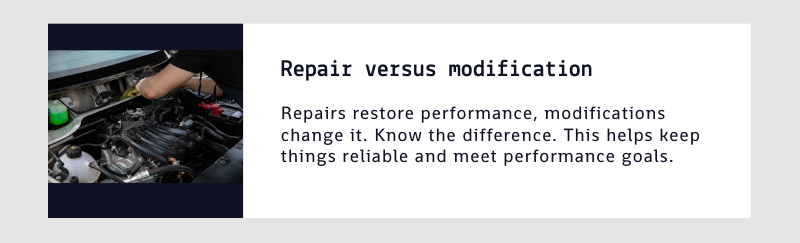
BMW M Series repair versus modification considerations
Repair and modification are often conflated in BMW M ownership, but they serve different purposes. Repairs aim to restore intended performance, while modifications alter vehicle behavior.
Understanding this distinction helps owners make informed decisions that preserve reliability while meeting performance goals.
Regional expertise as a differentiator in M Series care
Regional expertise matters because environmental conditions shape failure patterns. Dallas and Plano driving environments create predictable stress points that experienced local specialists recognize quickly.
This contextual awareness improves diagnostic speed and repair precision.
Planning ownership costs through informed repair decisions
BMW M ownership costs stabilize when repair decisions are proactive and informed. Unexpected failures are more expensive than planned maintenance aligned with performance use.
Strategic repair planning supports both drivability and financial predictability.
Forward-looking perspective on BMW M Series ownership
BMW M Series ownership rewards informed maintenance and precise repair decisions, particularly in demanding regions like Dallas and Plano. As M vehicles continue to integrate more complex performance systems, repair quality will increasingly define ownership satisfaction rather than raw specifications alone.
Frequently Asked Questions About BMW M Series Repair
What makes BMW M Series repair different from standard BMW service?
BMW M Series repair requires maintaining performance tolerances under sustained stress rather than focusing solely on comfort or longevity. High-output engines, reinforced drivetrains, and adaptive systems demand model-specific diagnostics and parts selection.
How often should BMW M vehicles be serviced in Dallas or Plano?
BMW M vehicles in Dallas and Plano typically require shorter service intervals than factory averages due to heat exposure and mixed driving conditions. Oil, brakes, cooling components, and driveline fluids often need closer monitoring regardless of mileage.
Are BMW M engines more prone to failure than non-M engines?
BMW M engines are not inherently less reliable, but they operate closer to mechanical limits. Failure risk increases when maintenance intervals, oil specifications, or cooling system performance are not aligned with performance usage.
Do BMW M transmissions require special maintenance?
BMW M transmissions require fluid and software management tailored to aggressive shift behavior and torque loads. Delayed service or incorrect fluid selection can accelerate wear even when no warning lights are present.
Why do BMW M suspension components wear faster in North Texas?
North Texas road conditions and heat accelerate wear on stiffer bushings, adaptive dampers, and alignment-sensitive components. Performance suspension systems transfer more road input into components, increasing fatigue over time.
Can generic diagnostic tools accurately diagnose BMW M issues?
Generic diagnostics often misinterpret BMW M performance adaptations as faults or overlook early failure indicators. Accurate diagnosis requires interpreting data in the context of performance calibration and driving behavior.
Is it better to repair or replace components proactively on BMW M models?
Proactive repair is generally more effective for BMW M vehicles because secondary failures are common when stressed components are left unaddressed. Early intervention preserves performance balance and reduces long-term repair costs.
Does proper BMW M Series repair affect resale value?
Proper BMW M Series repair supports resale value by demonstrating informed ownership and performance-aware maintenance. Buyers often prioritize documented, model-specific service over low mileage alone.